DISABILITY ACCESSIBILITY AUDIT AND ENHANCE THE CAPACITY OF TECHNICAL OFFICERS IN THE LOCAL GOVERNMENT STRUCTURE in Anuradhapura District
#Disability #Accessibility programmes include persons with diverse disabilities, ways in which their physical and emotional well-being are fulfilled and legal aspects of accessibility to the built environment.
The objective of the initiative is to develop the capacity of local authorities and raise awareness among technical officers, Officials in the decision-making process, Engineers, Architects, and Officials in the Planning Divisions. It is expected that this intervention will ensure that people with disabilities can access all public buildings and make use of the facilities inside those buildings as Regulations are intended to be accomplished.
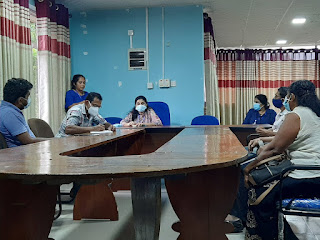
The team from EFC led by #Manique Gunaratne which included persons with diverse #disabilities conducted the Anuradhapura 2 training workshop at the #Corporative #Training #Resort in Anuradhapura district, in #North #Central #Province in January 2022.
#CDLG is a four-year project (2020-2023) targeting the Eastern, Northern, North-Central and Uva Provinces of Sri Lanka.
It is part of the European Union’s STRIDE (Strengthening Transformation, Reconciliation, and Inclusive Democratic Engagement) programme focused on strengthening the capacities of local government authorities to be inclusive, responsive, and accountable, and improve service delivery.
Together with the Capacity Development of Local Governments (CDLG) Project of United Nations Development Programme (UNDP) and The Employers’ Federation of Ceylon (EFC), implemented this project on Disability accessibility audit and enhancing the capacity of technical officers in the local government structure.
The EFC, with an overall vision statement to promote social harmony through productive employment, is implementing several proactive measures to encourage its members to hire people with disabilities.
The EFC is the representative employers’ Organisation in Sri Lanka on social issues. It has a membership of 700 plus member Companies. Formed in 1929, it was the first Organisation to register under the Trade Unions Ordinance and is the principal Trade Union representing employers. The EFC, with funding from the #ILO, developed the Employers’ Network on Disability to facilitate employment and training opportunities in the Private Sector for disabled jobseekers, which was officially launched in the year 1999. It has a membership of 650 plus Companies.
The “Disability Accessibility” project implemented by The Employers’ Federation of Ceylon, Specialised Training & #Disability Resource Centre is a part of an initiative supported under the Capacity Development of Local Governments (CDLG) project implemented by the United Nations Development Programme (UNDP) in Sri Lanka with the financial assistance of the #European #Union (#EU).
Disability #inclusion is one of the key strategic priorities for #UNDP Sri Lanka in keeping with the commitment of UNDP globally and the new initiatives of disability inclusion strategy and their commitment to leave no one behind.
The importance of this workshop was that all resource persons were persons with disabilities. Manique Gunaratne conducted the session on “Technical specifications on accessibility” and Anil Seneviratne conducted the session on “law and access”. People with physical disabilities, hearing impaired persons and vision impaired persons spoke on the barriers faced by persons with disabilities and possible solutions.
Participants with non-disabilities got the opportunity to experience of using a wheel chair, walking with a white cane, walking blind folded, waring socks and shoes without using hands and communicating in sign language.
The Network on Disability is actively serving its purpose by strengthening the link between organizations dealing with disability related issues, business community and persons with disabilities.


#Kishara #Manique Gunaratne
Disability Equality Facilitator qualified from Japan International Corporation Agency (#JICA)

Comments
Post a Comment